


“Organic is just waste to me.” You often hear clever sayings like this from people who don’t want to buy the usually more expensive food option. For many, luxury items like smartphones, clothes, and vacations are more important than high-quality nutrition.
Why organic products are anything but trash is something we explain in our Organic Supplements Guide. We’ll tell you what makes organic products special and what the legal situation is in Europe. We’ll also discuss why organic isn’t always sustainable and what you should look out for when buying.
What Does Organic Mean?
But what does “organic” actually mean? When we see the term, we assume that the production of the labeled products happened naturally and that no chemicals like pesticides or growth hormones were used.
But what does the organic factor really mean—and what doesn’t it mean? The problem is that in many areas, there are no clear regulations. In the cosmetics industry, we often find private institutions marketing the “organic seal” for a greener touch. But there are no uniform rules. It’s different in the food industry. Here, the term organic is protected by law.
Organic Foods Are Clearly Defined
The regulations for organic foods are thankfully very strict. For the organic seal, foods must be inspected and certified by an authority. The label is only issued if the producer meets the European Union (EU) legal requirements for organic farming.
These guidelines specify which plant protection products, fertilizers, and additives are allowed. There are also precise rules about how many animals can live on a certain area and which types of feed are permitted.
Conventional producers have much more freedom and are allowed to use pesticides for pest control. Chemical residues on fruits and vegetables can still be found in our food even after harvest.
“The organic seal is only issued if the producer meets the legal requirements of the European Union for organic farming.”
The Environmental Working Group (EWG) determines the pesticide contamination of the 47 most popular fruits and vegetables every year. The “Dirty Dozen” refers to the twelve dirtiest foods. You should avoid these if they come from non-organic sources and instead buy their organic versions. In 2019, these three foods topped the “dirty” podium:
- 1st place: Strawberries
- 2nd place: Spinach
- 3rd place: Kale
If you buy products with the green EU organic or the hexagonal German organic seal, you not only reduce your intake of toxins, but also support more sustainable farming practices.
Organic Animal Products Have Stricter Regulations
One important reason to look for organic seals, especially with animal products like supplements, is the stricter guidelines for animal welfare compared to standard products. The regulation requires that animal husbandry meets the animals’ needs and that they must have access to outdoor areas.
Animals must not be kept isolated from their own kind, and transport routes must be as short as possible. It’s also forbidden to fatten animals with growth hormones.
Tip: If you’re interested in how our dairy cows live in Germany, check out our blog post “A Cow’s Life – What’s Life Like for a ‘Pasture Cow’ in Germany?”
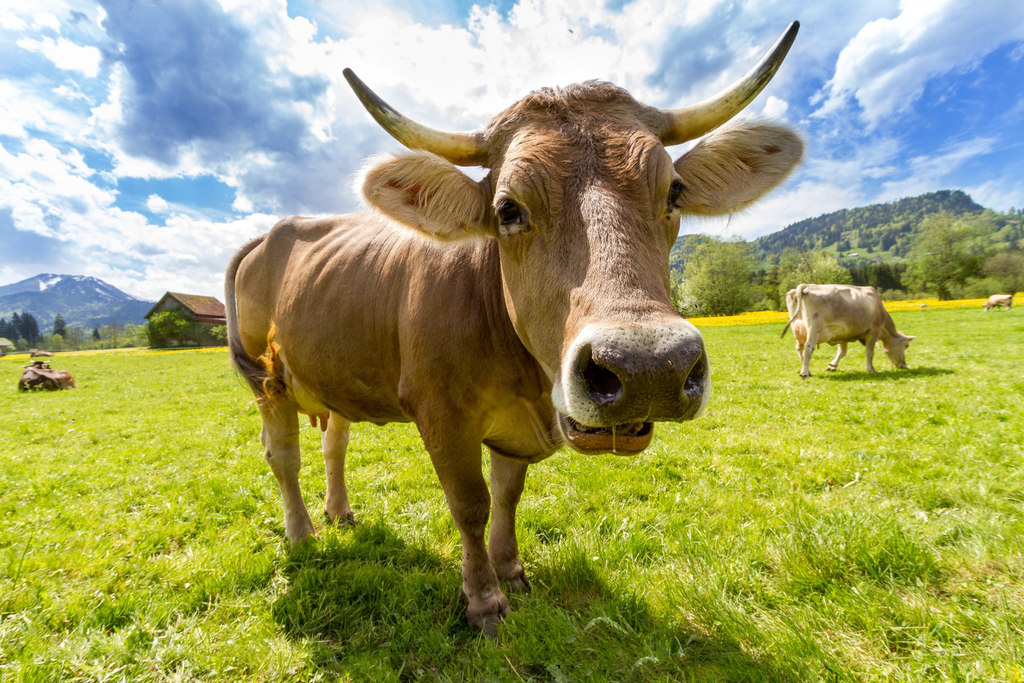
Organic means more humane animal husbandry.
Why should this matter to you? Of course, cows, pigs, and chickens on an organic farm have a better life. The poor living conditions of animals in conventional farms mean they’re often stressed, pumped full of antibiotics and growth hormones, and extremely fat.
The latter means a lot more calories on your plate, which go straight to your hips. And after eating the cheaper product, the added medications and hormones end up in your body. These additives don’t just change the taste and quality of the food—they can even make us sick in the long run.
Organic Supplements: Pros and Cons
Organic supplements offer the same advantages over their competitors as organic foods do. The supplements are extracted and concentrated from organic products. With non-organic alternatives, impurities and chemicals from cheaply produced raw materials are not filtered out.
By the way: We source our organic milk from pasture-raised cows in Germany. That means our Organic Whey contains no antibiotic residues or stress hormones.
The downside, of course, is that organic supplements are more expensive than standard products. In general, supplements tend to be a bit pricier. Anyone who wants to support their health with supplements should ask themselves whether they want to do it as cheaply as possible or with high quality.
Sustainable Organic Nutrition – What Makes It Special
By now, customers have developed a certain trust in the organic seal. However, “organic” doesn’t always mean “sustainable.”
If you want to eat ecologically and live sustainably, you should also pay attention to the product’s country of origin. The organic seal will tell you whether it’s a product from German, EU, or non-EU agriculture.
Organic potatoes can also come from Egypt and, thanks to the equivalency agreement in Europe, are labeled as organic products. However, water consumption in Egypt is much higher than in Germany, and the potatoes have to travel hundreds of kilometers across the sea.
The product may be organic, but it’s anything but sustainable. Plus, you have to ask why we’re buying potatoes from Egypt when we can produce more than enough in Germany.
Food Law and Control – What You Really Need to Know
In 2005, fraud cases involving organic products came to light. Conventional bulk goods like sugar and grains were simply relabeled as “organic.” To put a stop to this, the EU Commission tightened the regulations and included all organic product traders in the control process.
Every company in the EU that deals with organic foods, such as trading companies or online retailers, must register with a control body and undergo regular inspections. Retailers are exempt if they don’t process the products themselves or store them outside the company.
Organic foods are subject to strict regulations.
“Every company in the EU that deals with organic foods must participate in the control process.”
The EU Organic Seal Criteria
If a company wants to advertise with the EU organic seal, it must comply with clearly defined rules. Here are the most important ones:
- No genetically modified products.
- Only 53 additives are permitted during processing. For comparison: standard products allow 316.
- Only organic animal feed may be used. Preventive use of antibiotics is strictly prohibited.
- Animals must be kept in a species-appropriate way. There is a maximum number of animals per hectare.
- Products must not be treated with chemical or synthetic pesticides or fertilizers.
Steps to the Organic Seal
To receive the organic seal, the business must first contact a control body in Germany. The process starts with submitting information about the company, the organic products produced, and a description of quality management.
During an inspection, compliance with and assurance of the organic regulation is checked. If the company meets all EU requirements, the organic control body issues the organic certificate.
Trust Is Good, Control Is Better
But just because a company has received the EU organic seal doesn’t mean it can rest easy. There are further regular inspections that businesses must undergo. At least once a year, they are checked. Every fifth visit is unannounced.
During the annual inspection and, if necessary, spot checks, all raw material orders, produced batches, supplier organic certifications, and outgoing goods are reviewed.
Organic Beats Standard
Organic is more expensive, but healthier. Not just in terms of animal welfare, but also in the treatment and processing of food. Conventional products and supplements can be contaminated with pesticides and antibiotics. And those end up directly in our bodies and make us sick.
That’s why we recommend using organic products for healthy muscle growth. Orgainic.
Title image by Archie Binamira. More images from Pixabay and CQF-Avocat.