


“Humans are creatures of habit”—and rarely is that more obvious than during the darker months of the year. New Year’s resolutions are a prime example of how we can’t overcome our inner couch potato as easily as we think. Why New Year’s resolutions don’t work and how you can make lasting changes to your habits—we’ll reveal just in time for the turn of the year.
A central theme of good resolutions is often your own lifestyle. You want to eat more sustainably, exercise more, lose a few kilos, and live healthily? You’re definitely not alone—at least one of these points is on most people’s list of resolutions.
The bad news: Very few people actually manage to change their habits, and most lose sight of their goal after just a few weeks. But why is it so hard to break habits?
What is a habit?
A habit is a behavior you adopt for recurring situations and carry out routinely, without having to consciously focus on it. You can see this clearly in smokers who, for example, always reach for a cigarette when they drink coffee. The trigger is the coffee, the habit is smoking, and the reward is the endorphin rush from satisfying the craving. 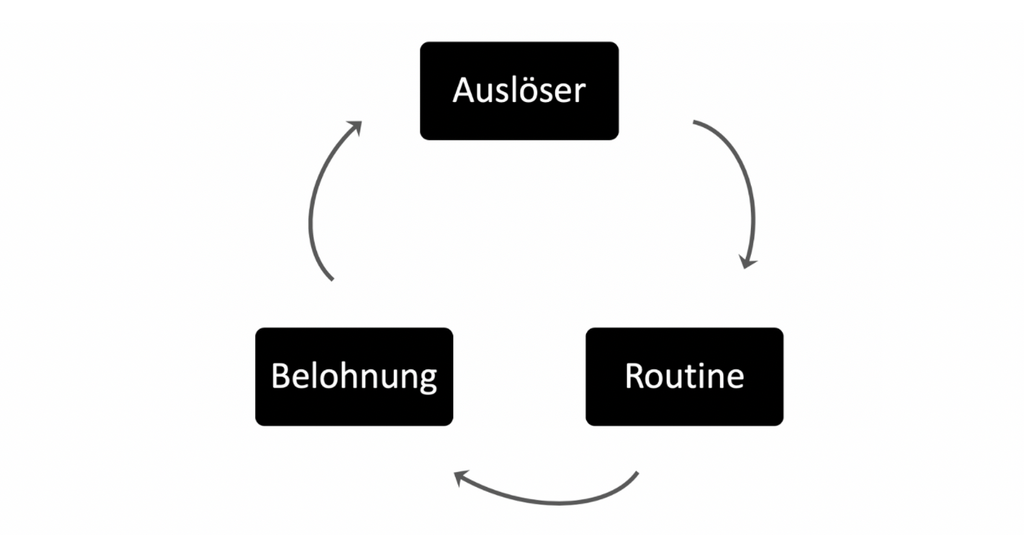 The behavioral loop, consisting of trigger, routine (habit), and reward
Habits usually help us get through everyday life more quickly, without having to make constant decisions—pretty practical, right? Well, yes and no, because the behavior is based on a decision that seemed good a long time ago. So while they can work, habits can also be unhealthy, annoying, or simply time-consuming.
How habits are formed
Before we look at how you can change habits and achieve your new resolutions, we need to understand how we actually tick.
“Habits are formed according to the psychological pattern of a habit loop, which consists of three phases.”
[Stangl, 2019, Online Lexicon for Psychology and Education]
There are certain situations, times, or moods that trigger the behavior we’d like to change. Our habit has always gotten us through this situation and given us a sense of reward. If a certain behavior proves itself several times in the same situation, it becomes a habit.
The power of habit
Even if we can handle certain situations with our routines, habits often have unwanted side effects that we accept—and often don’t even notice.
Let’s look at a typical New Year’s resolution:
“I want to exercise more next year.”
After a long day at work, you get home and that feeling of having accomplished something makes you crave a reward. A glass of wine, a bag of chips, or the couch with the remote seem like the perfect candidates, right? It’s almost as if your brain whispers: “Just do it, then you don’t have to think of anything else right now.” Said and done, and the well-deserved relaxation with a side of chips feels good at first.
The long-term consequences, however, are more annoying or even unhealthy and bad for our well-being. Recognizing this is an important first step—but how do you break out of this vicious cycle?
Changing habits—how to succeed
We now know that habits always come with a trigger and a reward. Forcing a behavior change can work, but it’s usually doomed to fail if you don’t know its origin and goal.
Tip 1: Identify the trigger for your habit
Triggers can be times of day, places, other people, or even moods. From now on, pay attention to what prompts your habit. If you find it difficult, it often helps to write down as many possible triggers as you can think of. Over time, you’ll spot a pattern.
Tip 2: Replace the routine with your new, desired behavior
If coming through the front door magically pulls you to the couch, why not go straight to the gym after work? Put your workout clothes right by the door, in your car, or play motivating music that reminds you you’ve still got plans.
Tip 3: Find a reward that motivates you to establish a new habit
Remember that bag of chips? Forget it! Paying extra attention to your nutrition will hugely support your overall goal. The more you change, the more committed you’ll be to sticking with your goal. Still, make sure you set realistic goals. They should also include small milestones and real rewards, so it’s not too hard to stay on track.
Go for high-quality energy sources before your workout and natural protein sources after training. If the Organic Whey Protein shake tastes better than gummy bears and your body feels better than ever before, then you’ve successfully changed your habit.
Stick with it—motivate yourself
You’ve set a goal, you’ve started your journey, so don’t stop now. We all know the devil never sleeps, and habits can only be replaced or suppressed by others, but never completely erased. That’s why you should know the biggest enemies of good intentions and always keep an eye on them.
Plan B – Better Safe Than Sorry
Things will always get in your way, so be prepared. If you can’t manage your home-cooked meal or your workout one day, it’s smart to have a Plan B ready in advance.
If you already know how you’ll handle these situations, you’ll stick to your new habit. Better to have a protein bar in your bag than to “just this once” grab lunch at the nearest fast-food joint. Better to take an evening walk as a workout substitute than to hit the couch with a soda.
Hold Yourself Accountable
It’s usually easier to cheat yourself than others – that’s a fact. Tell your friends and colleagues about your training or healthy eating. The more eyes on you, the less likely you’ll want to allow yourself a “slip-up.”
A Minimum of Self-Control
If you set goals, you have to pursue them consistently. This is especially true when learning new habits, because it can take several weeks before they become second nature. We’ve revealed tricks for more discipline in our article “Learn Self-Control and Stay Fit Through the Holiday Season”.
You Don’t Need a New Year for Good Resolutions
It might be a nice occasion, but for your goal it doesn’t matter whether you make your resolutions in January, June, or October. Sustainable change starts exactly when you’re ready to break old patterns. A new lifestyle, more fitness, and natural nutrition are the foundations that will take your everyday well-being to a new level.
Ready to take action and feel full of energy, focused, and balanced? Turn your back on a sedentary, energy-draining routine and discover how much strength a healthy, balanced lifestyle can awaken in you.
Title image by Blackmachinex. Graphic by Markus Henien.